kimono.mom

The Kimono Encyclopedia

Everything you need to know about Japan's most iconic traditional garment.

Generating image...

What is Kimono?

The kimono is Japan's most iconic traditional garment, a T-shaped, straight-seamed robe that wraps around the body with the left side over the right and is secured by a wide sash called an obi. The word "kimono" literally translates to "thing to wear" (ki = wear, mono = thing), reflecting its historical status as the default clothing of Japanese people for over a thousand years.

Unlike Western tailored clothing that follows the curves of the body, the kimono is constructed from a single bolt of fabric (tan) approximately 36 centimeters wide and 12 meters long. This fabric is cut into rectangular panels and sewn together with minimal waste — a design philosophy that embodies the Japanese aesthetic of mottainai (avoiding waste). The flat construction allows the fabric's artistry to be displayed like a canvas, with dyeing, weaving, painting, and embroidery techniques that can take months or even years to complete.

The kimono is far more than just clothing. It is a sophisticated communication system that conveys the wearer's age, marital status, social standing, and the formality of the occasion through its colors, patterns, fabric type, and style of wearing. A young unmarried woman at a coming-of-age ceremony, a mother at her daughter's wedding, and a tea ceremony practitioner each wear distinctly different kimono that speak volumes without a word being spoken.

Today, while daily kimono wearing has largely given way to Western clothing, the kimono remains central to Japanese cultural identity. It is worn for major life events — births, coming-of-age ceremonies, weddings, and funerals — and continues to inspire global fashion designers, artists, and cultural enthusiasts worldwide. The kimono represents a living tradition that bridges Japan's ancient past with its contemporary present, adapting to modern sensibilities while preserving techniques perfected over centuries.
Try on this kimono with AI →
Generating image...

History of Kimono

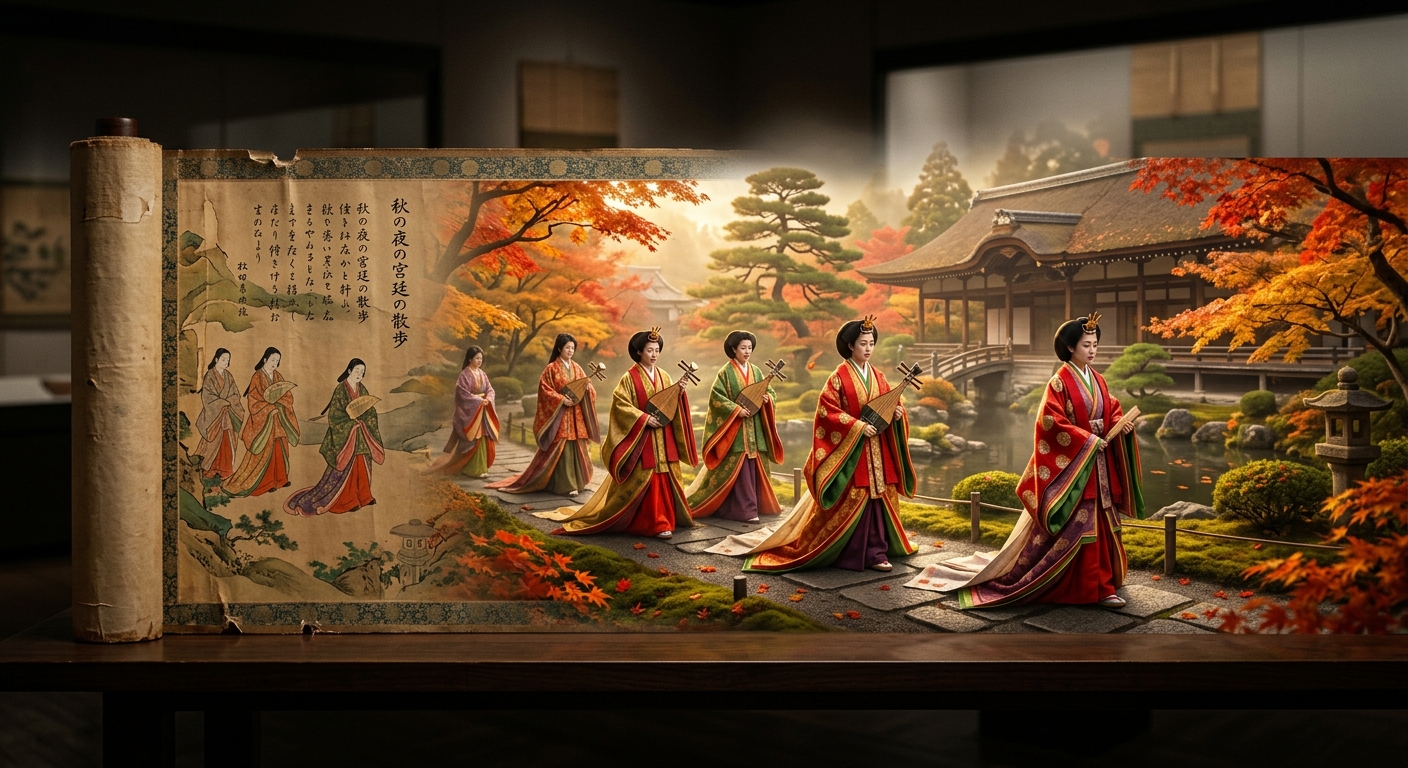
The history of the kimono stretches back over twelve centuries, evolving from simple Chinese-influenced court garments into one of the world's most sophisticated textile traditions.

HEIAN PERIOD (794–1185): The foundation of kimono culture was laid during the Heian period when the Japanese court developed the junihitoe, a twelve-layered ceremonial robe worn by noble women. The art of color coordination between visible layers (kasane no irome) became a refined aesthetic pursuit. During this era, Japan severed cultural ties with China, and Japanese clothing began to develop its own distinct identity.

KAMAKURA & MUROMACHI PERIODS (1185–1573): As samurai culture rose to dominance, clothing became simpler and more practical. The kosode (small-sleeve garment), which had been an undergarment, emerged as the primary outer garment — the direct ancestor of the modern kimono. Warriors adopted distinctive patterns to identify their clan allegiances on the battlefield.

EDO PERIOD (1603–1868): This golden age of kimono saw an explosion of textile arts. The peaceful, prosperous era fostered incredible innovations in dyeing techniques including yuzen (paste-resist dyeing), shibori (tie-dye), and katazome (stencil dyeing). Sumptuary laws that restricted what each social class could wear ironically spurred creativity, as merchants found subtle ways to display wealth through superior fabric quality and hidden luxury. Kabuki theater heavily influenced fashion trends, with popular actors becoming style icons.

MEIJI ERA (1868–1912): The opening of Japan to the West brought dramatic changes. The government promoted Western dress for official occasions, and men rapidly adopted suits and uniforms. Women's kimono persisted longer in daily life but began incorporating Western influences such as synthetic dyes and new color combinations. This era formalized many kimono rules still observed today.

TAISHO ERA (1912–1926): A brief flowering of artistic freedom produced bold, Art Deco-influenced kimono designs. Meisen kimono — affordable silk with modern geometric patterns — became wildly popular among urban women. This era is remembered as one of the most creative periods in kimono design history.

SHOWA ERA (1926–1989): World War II and post-war modernization accelerated the shift away from daily kimono wearing. By the 1960s, most Japanese wore Western clothing for everyday life. However, the kimono was preserved for ceremonial occasions, and the formal rules governing appropriate kimono for different events became more codified.

MODERN ERA

Today, kimono exists in a dynamic tension between tradition and innovation. Vintage kimono markets thrive alongside contemporary designers who reimagine traditional techniques. The kimono rental industry has boomed, particularly in tourist destinations like Kyoto, making the experience accessible to both Japanese youth and international visitors. UNESCO-recognized techniques like Yuki-tsumugi weaving continue to be practiced, ensuring that centuries-old craftsmanship survives into the future.

Try on this kimono with AI →
Generating image...

Types of Kimono

Japanese kimono exist in a carefully structured hierarchy of formality, and understanding the different types is essential for wearing kimono appropriately. Here is a comprehensive overview of every major kimono category.

FORMAL KIMONO

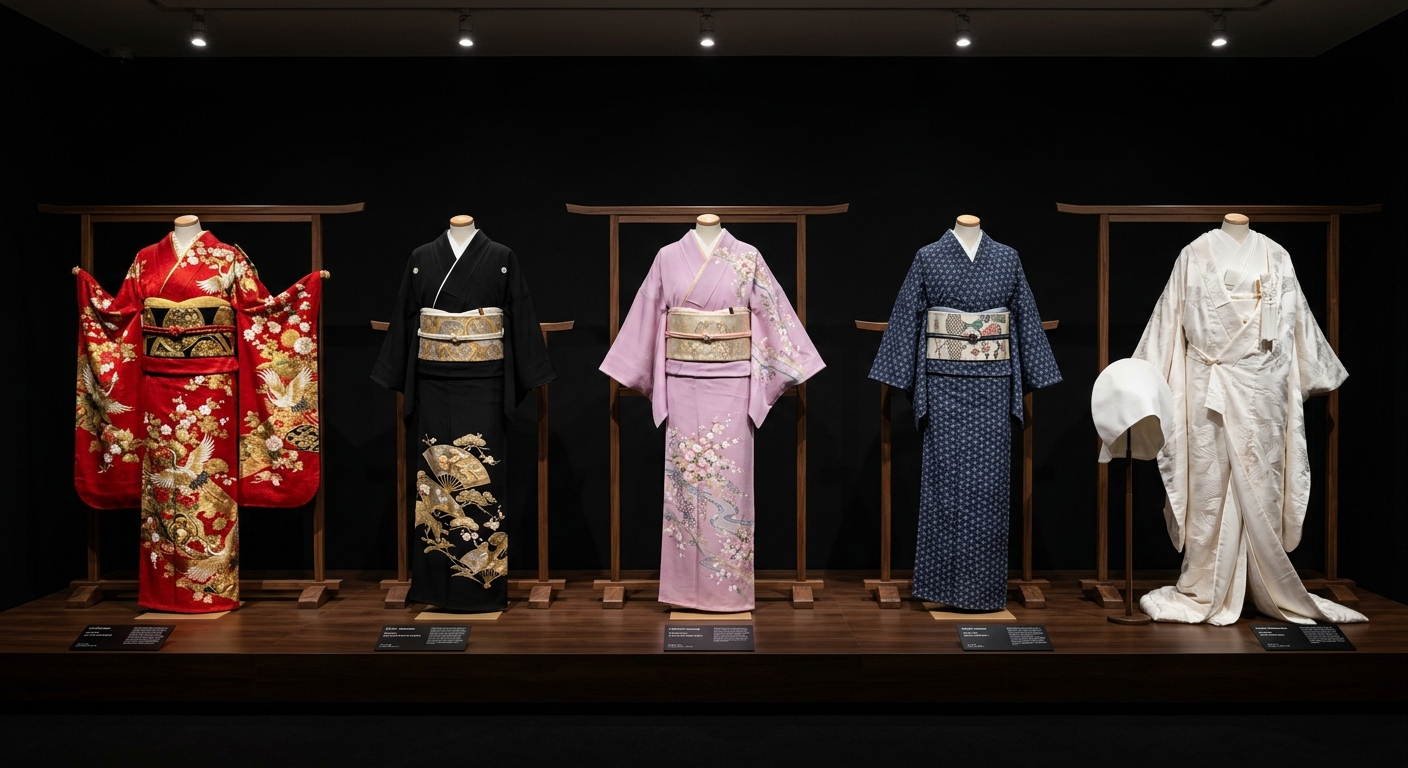
Kurotomesode: The most formal kimono for married women. Entirely black with colorful patterns only below the waist and five family crests. Worn by mothers at their children's weddings.

Furisode: The most formal kimono for unmarried women. Distinguished by dramatically long swinging sleeves (up to 114 cm) and vibrant patterns covering the entire garment. The quintessential Coming-of-Age Day outfit.

Shiromuku: The pure white bridal kimono for Shinto wedding ceremonies. Every element — from outer robe to accessories — is white, symbolizing purity and readiness to join the groom's family.

Mofuku: The all-black mourning kimono with five crests and no decorative patterns. Worn by close family members at funerals and during the initial mourning period.

SEMI-FORMAL KIMONO

Irotomesode: A colored version of the Tomesode with patterns below the waist. It can bear one, three, or five crests, with formality increasing with the number of crests. Suitable for wedding guests and formal gatherings.

Houmongi: The versatile "visiting wear" kimono featuring continuous patterns that flow across the seams. Appropriate for tea ceremonies, theater visits, formal dinners, and wedding receptions.

Tsukesage: Similar to Houmongi but with patterns that do not cross the seams. Slightly less formal, making it a practical choice for a wide range of semi-formal occasions.

Iromuji: A single-colored kimono without pictorial patterns, favored for tea ceremony. Its formality depends on the number of family crests.

CASUAL KIMONO

Komon: Features small, repeating patterns across the entire fabric. Created through stencil-dyeing, Komon is the everyday kimono for casual outings and social gatherings.

Tsumugi: Made from hand-spun silk with a distinctive nubby texture. Despite being made from expensive handcrafted fabric, Tsumugi is classified as casual wear because of its rustic aesthetic.

SEASONAL AND SPECIAL

Yukata: A lightweight, unlined cotton kimono for summer. Worn at festivals, fireworks displays, and hot spring resorts. The most accessible type for beginners and tourists.

Hakama: Wide-legged pleated trousers or divided skirt worn over a kimono. Associated with graduation ceremonies (for women) and martial arts, Shinto ceremonies (for men).

Uchikake: A heavily brocaded outer robe worn draped over a kimono without an obi. Used for the most formal bridal and stage costumes. Features a padded hem and is not tucked at the waist.

Try on this kimono with AI →
Generating image...

How to Wear Kimono

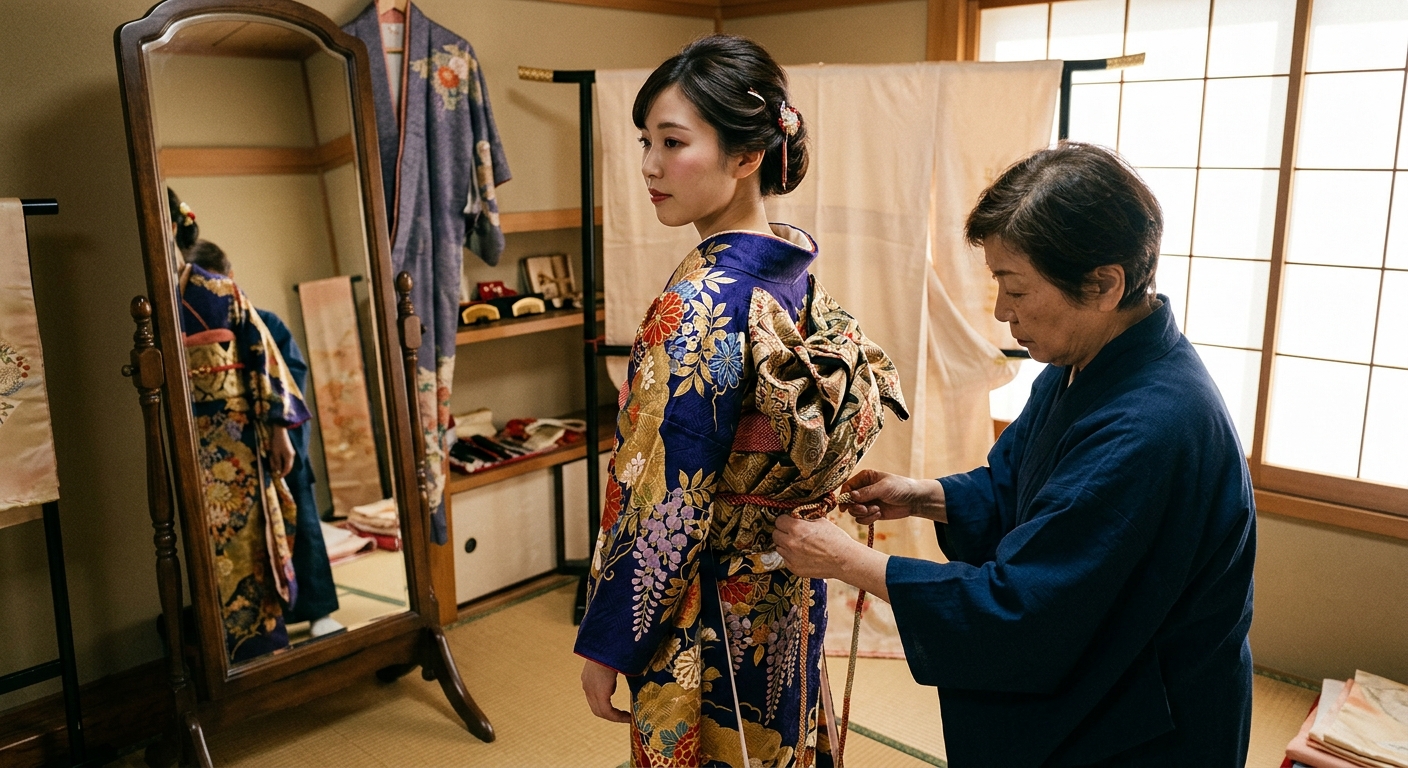
Putting on a kimono is a structured process that, with practice, becomes a meditative ritual. Here is a step-by-step guide to the traditional dressing process.

PREPARATION

Before dressing, gather all necessary items: hadajuban (undergarment), nagajuban (inner robe), kimono, obi (sash), obijime (decorative cord), obiage (sash cushion fabric), koshihimo (waist ties — at least 3), datejime (flat sash — 2), obi makura (obi pad), tabi (split-toe socks), and zori (sandals).

STEP 1 — UNDERGARMENTS: Put on tabi socks first (it is difficult to bend down later). Wear the hadajuban directly against the skin. The susoyoke (lower body wrap) goes underneath if the hadajuban is two-piece.

STEP 2 — NAGAJUBAN: Put on the nagajuban (inner robe), adjusting the back collar to sit about a fist-width away from the nape of the neck — this nape exposure (eri-ashi) is considered one of the most elegant aspects of kimono wearing. The collar should form a clean V-shape at the front. Secure with a koshihimo at the waist and smooth any wrinkles.

STEP 3 — KIMONO: Drape the kimono over the nagajuban. The critical rule: always wrap the LEFT side over the RIGHT. Right-over-left is reserved exclusively for dressing the deceased. Adjust the hem length so it barely touches the floor (or ankle-length for casual Yukata). Tie a koshihimo at the waist to secure the overlap, then fold excess fabric (ohashori) neatly over the waist tie. This fold should be smooth and about one hand's width visible below the obi.

STEP 4 — COLLAR ADJUSTMENT: Ensure the kimono collar sits slightly below the nagajuban collar so the white inner collar is visible — about 1-2 centimeters. Secure with another koshihimo and then a datejime flat sash over the chest area.

STEP 5 — OBI TYING: The obi is the most complex part. For the common taiko (drum) knot: wrap the obi around the waist twice, create a loop at the back using the obi makura pad, fold the remaining fabric into a neat rectangular shape, and secure with the obijime cord threaded through the center. The obiage fabric is tucked into the top of the obi for added color. Different obi knots exist for different occasions — the formal Niju-daiko (double drum), casual hanhaba (half-width), and decorative bows for Furisode.

STEP 6 — FINAL ADJUSTMENTS: Check all visible lines are smooth and parallel. The back seam should run straight down the center of the spine. The obi should sit at the natural waist for women (slightly lower for men). Put on zori sandals and carry a small clutch bag.

TIPS FOR BEGINNERS

Consider starting with a Yukata, which requires fewer layers and accessories. Many kimono rental shops in Japan include professional dressing service, allowing you to enjoy wearing kimono without mastering the complex dressing process yourself.

Try on this kimono with AI →
Generating image...

Kimono for Different Occasions

Choosing the right kimono for each occasion is one of the most nuanced aspects of Japanese culture. Here is a practical guide to matching kimono types with events.

WEDDINGS

Japanese weddings involve the most elaborate kimono traditions. The bride may wear a Shiromuku (white) for the Shinto ceremony and change into a colorful Uchikake or Furisode for the reception. The mother of the bride and groom wears Kurotomesode (black formal kimono) with five family crests. Female relatives wear Irotomesode (colored formal kimono) with three crests. Friends and colleagues may wear Houmongi or Furisode (if unmarried). Guests should avoid white (reserved for the bride) and overly flashy patterns that might upstage the wedding party.

COMING-OF-AGE DAY (SEIJIN-SHIKI)

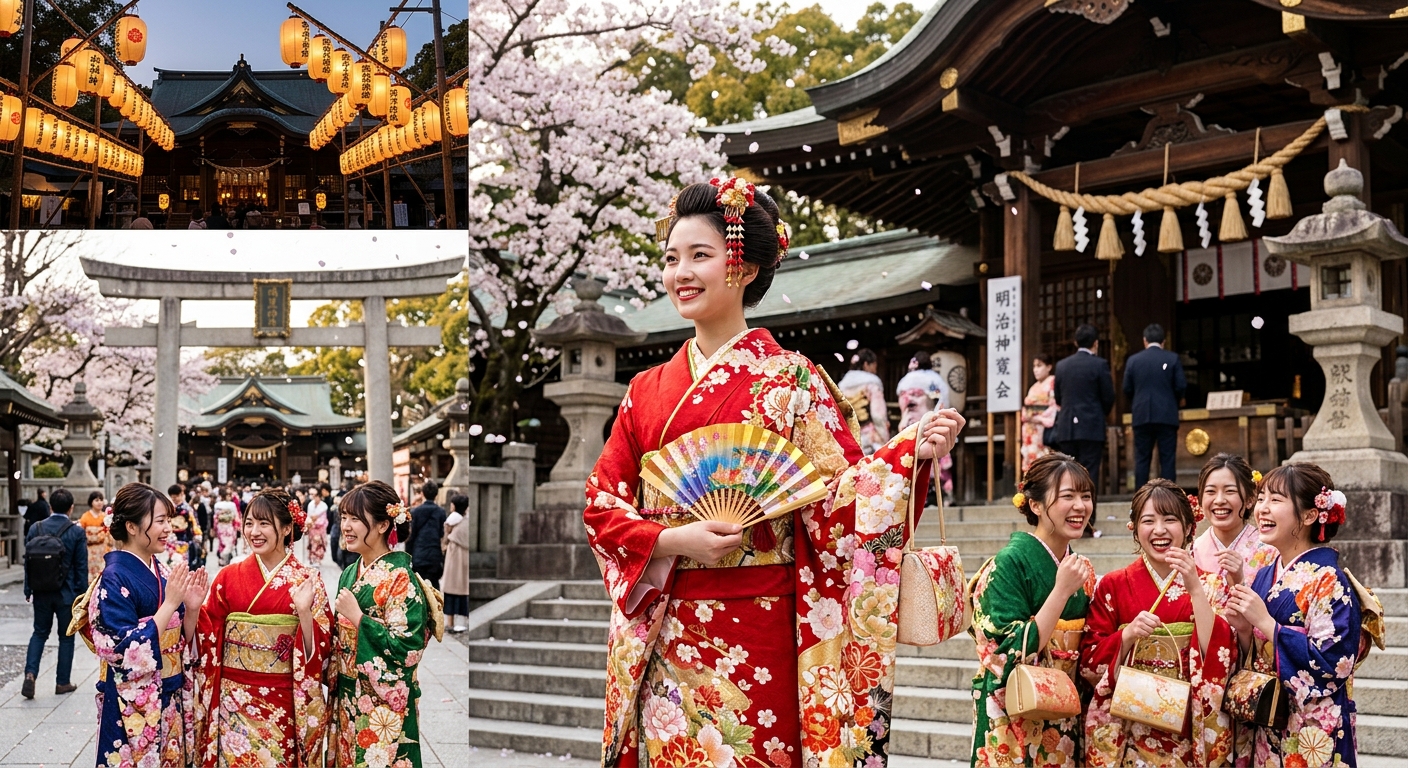
Young women turning 20 wear their most vibrant Furisode, often in red, pink, or other bold colors. This is one of the few occasions where maximum visual impact is expected and encouraged. Families often invest significantly in purchasing or renting a Furisode for this milestone celebration, held on the second Monday of January.

FUNERALS AND MEMORIAL SERVICES

Close family members wear Mofuku (all-black mourning kimono with five crests). Other attendees may wear dark-colored Iromuji with one crest or subdued Houmongi. During subsequent memorial services (49th day, annual anniversaries), the formality gradually decreases. Avoid bright colors, flashy patterns, and elaborate accessories.

TEA CEREMONY

The tea ceremony emphasizes restraint and harmony. Iromuji (single-color kimono) is the standard choice, as patterns would distract from the aesthetic experience. Muted, natural colors like sage green, soft purple, or warm gray are preferred. The kimono should complement the season without being showy. Seasonal colors include pale pink for spring, light blue for summer, warm amber for autumn, and muted gray for winter.

GRADUATION CEREMONIES

Female university graduates traditionally wear a colorful kimono with hakama (pleated trousers/skirt). The combination represents both academic achievement and traditional beauty. Popular color combinations include burgundy hakama with a pink floral kimono. Male graduates may wear montsuki (crested kimono) with hakama and haori (jacket).

SUMMER FESTIVALS (MATSURI)

Yukata are the standard for summer festivals, fireworks displays (hanabi), and Bon Odori dancing. This is the most casual kimono occasion, and creativity in pattern and color choice is encouraged. Couples often coordinate their Yukata colors.

NEW YEAR VISITS (HATSUMODE)

Visiting shrines and temples on New Year calls for celebratory but not overly formal kimono. Houmongi, Komon with auspicious patterns, or even dressy Yukata-style garments are appropriate. Colors and patterns associated with good fortune — plum blossoms, pine, bamboo, and cranes — are popular choices.

BUSINESS AND FORMAL DINNERS

Houmongi or Tsukesage are safe choices for formal social occasions. The patterns should be elegant but not distracting. A kimono for business entertaining should project sophistication and cultural awareness without being overly ceremonial.

Try on this kimono with AI →
Generating image...

Famous Kimono Artists

Throughout history, certain master artisans have elevated kimono creation from craft to high art, producing works that are displayed in museums and treasured as national heritage.

KUBOTA ITCHIKU (1917–2003): Perhaps the most internationally renowned kimono artist, Kubota Itchiku dedicated his life to reviving and reinventing tsujigahana, a lost dyeing technique from the Muromachi period. His "Symphony of Light" series — a planned 80-piece kimono collection depicting Mount Fuji across the seasons — is considered one of the greatest textile art projects ever conceived. The Itchiku Kubota Art Museum on the shores of Lake Kawaguchi houses his masterworks, each kimono taking years to complete using a combination of tie-dyeing, hand-painting, and embroidery. His pieces have been exhibited at the Smithsonian, the Metropolitan Museum of Art, and the Musee des Arts Decoratifs in Paris.

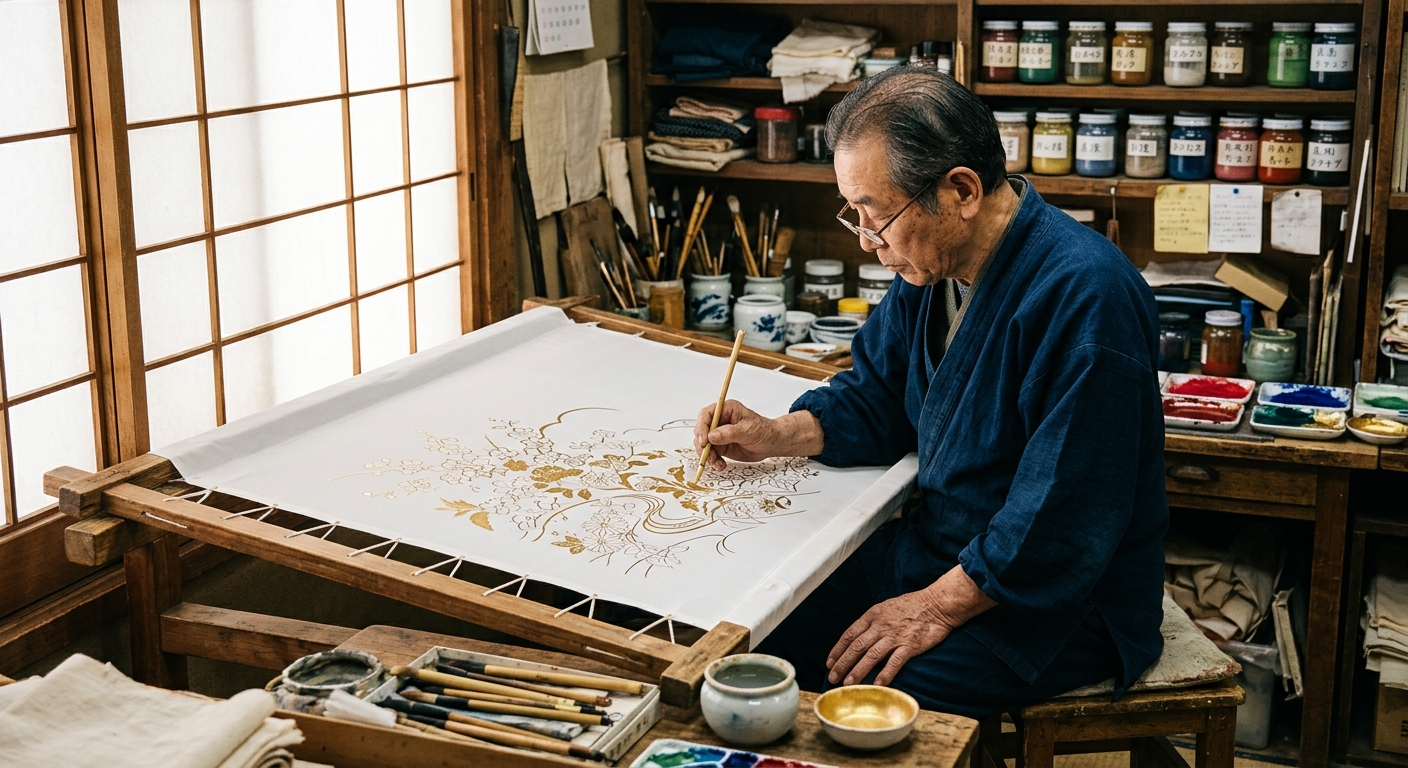
MIYAZAKI YUZEN (active late 1600s): The legendary Kyoto fan painter who is credited with developing yuzen-zome, the paste-resist dyeing technique that revolutionized kimono decoration. Before Miyazaki's innovation, elaborate kimono designs required expensive embroidery or gold leaf. Yuzen dyeing allowed artists to create flowing, painterly compositions directly on fabric using rice paste to prevent colors from bleeding. His name became synonymous with the technique itself — Kyo-yuzen (Kyoto yuzen) remains one of the most prized kimono arts today.

KUNIHIKO MORIGUCHI (born 1941): A Living National Treasure designated by the Japanese government for his mastery of yuzen dyeing. Moriguchi studied both traditional dyeing and modern abstract art in Paris, developing a unique geometric, almost op-art approach to yuzen that bridges traditional craft and contemporary design. His kimono works are held in major museum collections worldwide.

FUKUMI SHIMURA (1924–2024): A Living National Treasure celebrated for her plant-dyed tsumugi (hand-spun silk) textiles. Shimura gathered plants from the mountains near her Kyoto home to create natural dyes, producing colors impossible to achieve with synthetic methods. Her philosophy connected kimono creation to the natural world and seasonal cycles, with each piece reflecting the specific plants and seasons of its creation.

KAKO MORIGUCHI (1909–2008): Father of Kunihiko and himself a Living National Treasure for yuzen dyeing. Kako Moriguchi preserved and refined the makinori technique of yuzen, where rice paste is sprinkled in patterns to create delicate resist effects. His meticulous approach to traditional methods ensured that centuries-old techniques survived into the modern era.

KEISUKE SERIZAWA (1895–1984): Designated a Living National Treasure for kata-e-zome (stencil dyeing). While primarily known for his folk-art approach to textile design, Serizawa's bold graphic patterns influenced kimono design and Japanese textile arts broadly. He was closely associated with the Mingei (folk art) movement and brought a fresh, modern sensibility to traditional stencil techniques.

These artists represent just the visible peak of an enormous creative tradition. Throughout Japan, thousands of artisans continue to practice specialized kimono-making skills — from silk weaving to gold-leaf application to hand-painted yuzen — ensuring that this extraordinary art form continues to evolve and inspire.

Try on this kimono with AI →
Generating image...

Kimono Colors & Patterns

Every color and pattern on a kimono carries meaning, creating a rich visual language that communicates season, occasion, status, and personal sentiment.

SEASONAL COLORS

Japanese aesthetic tradition closely ties colors to the calendar. Spring calls for soft pinks (cherry blossom), fresh greens (new leaves), and wisteria purple. Summer favors cool blues, white, and indigo — colors that suggest water and coolness. Autumn brings warm amber, russet red, and gold inspired by changing leaves. Winter uses deep greens (evergreen pine), white (snow), and rich reds (camellia). Wearing a seasonal color slightly ahead of the actual season is considered sophisticated — it shows anticipation and awareness.

AUSPICIOUS COLORS

Red symbolizes vitality, happiness, and the power to ward off evil — which is why it dominates Coming-of-Age and wedding guest kimono. Gold represents wealth and prosperity. Purple historically indicated the highest nobility, as the dye was extremely rare and expensive. White represents purity and is reserved for brides and the deceased. Black conveys the utmost formality and solemnity.

PLANT MOTIFS

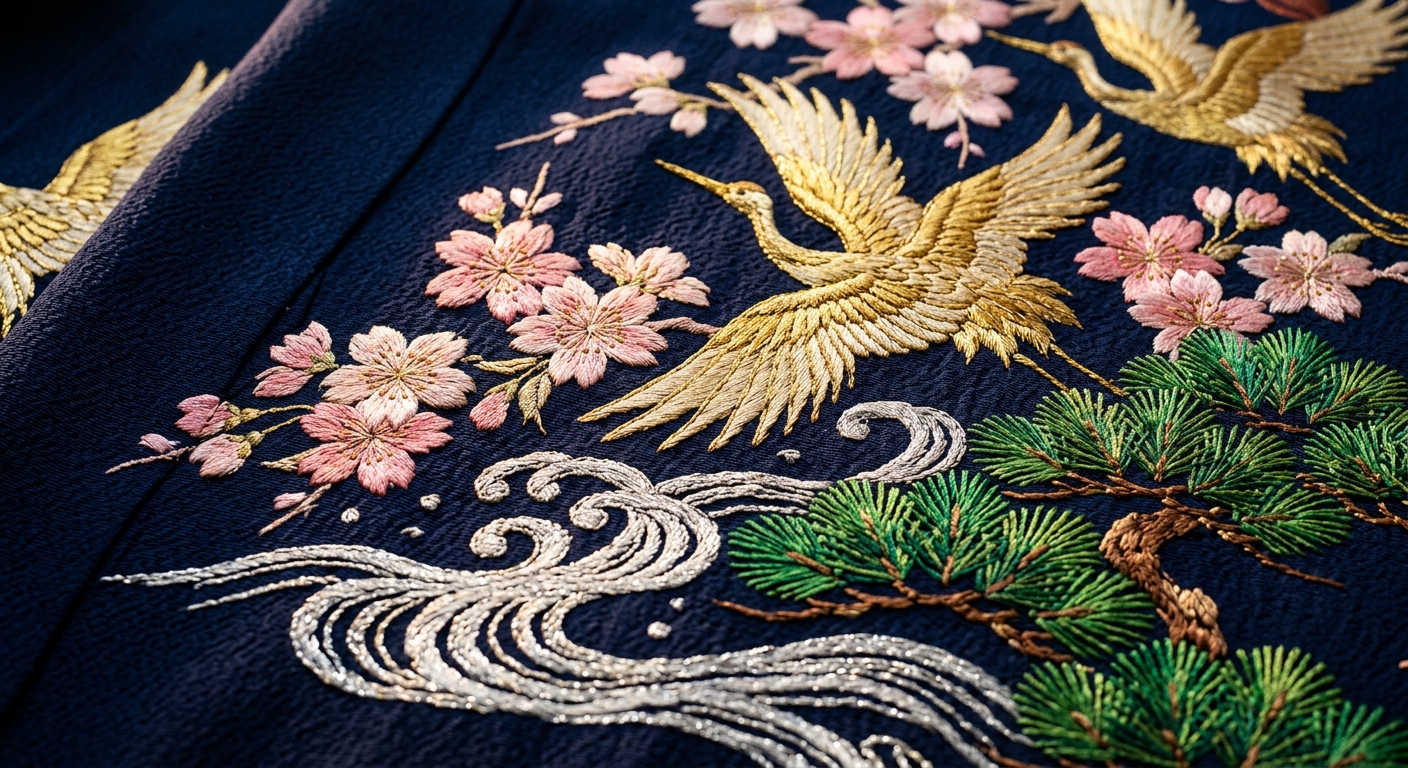
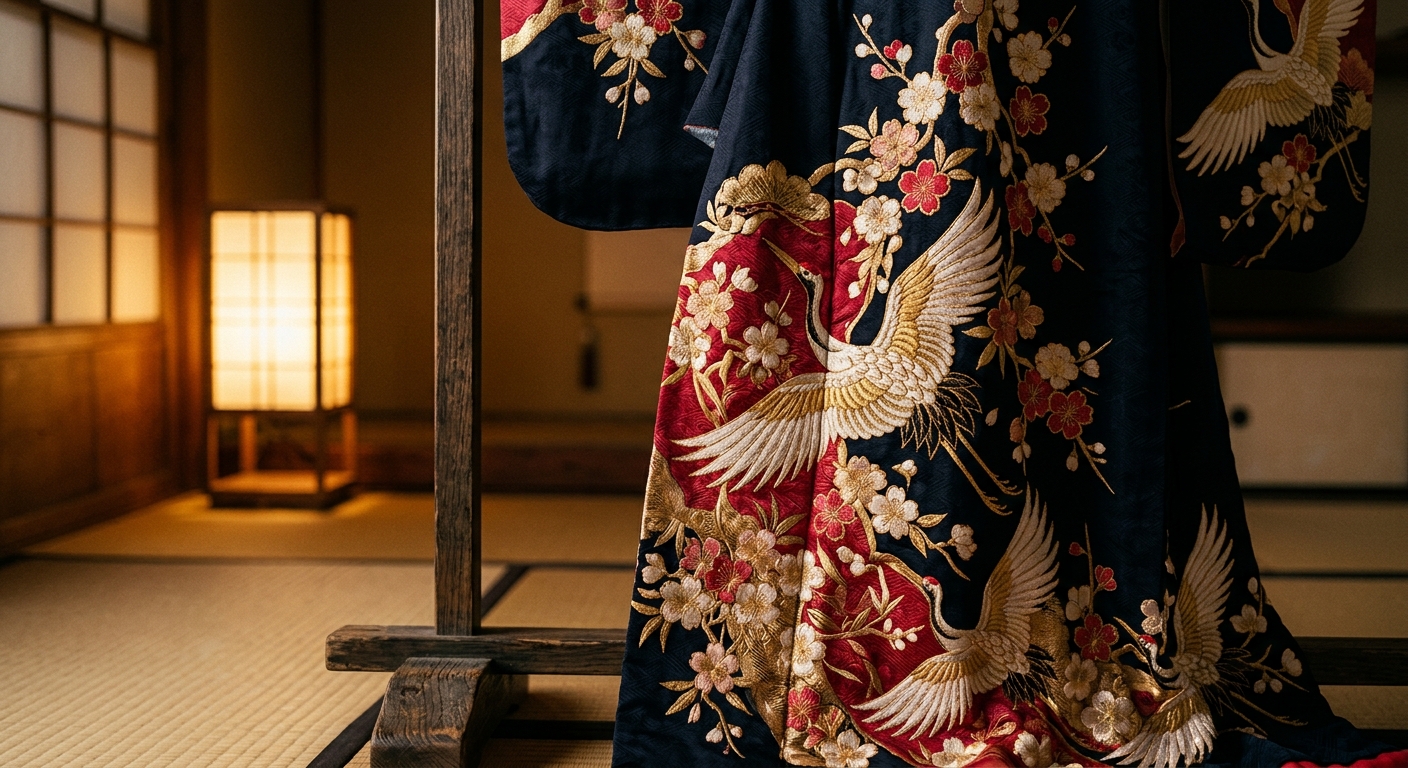
Cherry blossoms (sakura) represent the transient beauty of life and are worn in early spring. Chrysanthemums symbolize longevity and autumn nobility. Plum blossoms represent resilience and the first signs of spring. Pine trees signify endurance and eternal youth. Bamboo represents flexibility and strength. Together, pine, bamboo, and plum (sho-chiku-bai) form the classic trio of good fortune seen in wedding and New Year kimono.

ANIMAL MOTIFS

Cranes (tsuru) are the most auspicious kimono motif, symbolizing longevity, fidelity, and good fortune — legend says they live for a thousand years. Paired cranes are especially popular on wedding kimono. Butterflies represent transformation and joy. Koi fish symbolize perseverance and success (from the legend of koi swimming upstream to become dragons). Rabbits suggest cleverness and are associated with autumn (the rabbit in the moon).

GEOMETRIC PATTERNS

Asanoha (hemp leaf) is a six-pointed star pattern symbolizing growth and protection — traditionally used for baby clothing. Seigaiha (blue ocean waves) represents calm seas and good fortune. Yagasuri (arrow feathers) symbolize determination and are popular for graduation hakama. Shippo (seven treasures) is an interlocking circle pattern representing the seven Buddhist treasures and infinite connections.

NATURE SCENES

Flowing water (ryusui) represents purification and the passage of time. Clouds (kumo) suggest the transcendent and divine. Fans (sensu/ogi) symbolize expanding prosperity — like a fan opening. Waves with pine (nami-ni-matsu) combine the dynamism of the ocean with the steadfastness of evergreen trees.

MODERN INTERPRETATIONS

Contemporary kimono designers freely mix traditional motifs with modern aesthetics — abstract geometric patterns, pop art influences, and even Western floral designs. Vintage kimono from the Taisho era (1912–1926) featuring Art Deco patterns are particularly prized by collectors for their bold departure from classical conventions.

Try on this kimono with AI →
Generating image...

Kimono Care & Storage

A well-maintained kimono can last for generations, with many families passing down prized garments as heirlooms. Proper care and storage are essential to preserving both the fabric and the artistry.

AFTER WEARING

Immediately after removing a kimono, hang it on a kimono hanger (emon-kake) — a special T-shaped hanger that supports the full wingspan of the sleeves. Let it air in a well-ventilated room away from direct sunlight for at least 24 hours. This allows body moisture and any odors to dissipate naturally. Never hang a kimono on a regular clothes hanger, as the narrow shape will stretch and distort the shoulders.

SPOT CLEANING

For minor stains, act quickly. Blot (never rub) the affected area with a clean, damp cloth. For silk kimono, test any cleaning solution on a hidden area first. Many kimono owners keep a small emergency cleaning kit that includes benzine (a gentle solvent used in Japan for silk cleaning), soft cloths, and talcum powder for absorbing oil-based stains. For serious stains, always consult a professional kimono cleaner (kimono-senmon cleaning service).

PROFESSIONAL CLEANING

Silk kimono should be professionally cleaned using a process called mariarai, where the kimono is completely disassembled, each panel is washed individually on a wooden stretching board (shinshi), and the garment is re-sewn. This process, while expensive, preserves the fabric integrity and restores the kimono to nearly new condition. It is recommended every few wearings or before long-term storage.

FOLDING (TATAMI-KATA)

Kimono must be folded according to a specific method called hon-datami. This folding technique follows the seam lines of the garment, ensuring the decorative surfaces are protected within the folds. The process involves: laying the kimono flat, folding the right side over along the seam, aligning the left side on top, folding the sleeves back, and then folding the length in half or thirds. Proper folding prevents creasing in visible areas and allows the kimono to lie completely flat for storage.

STORAGE

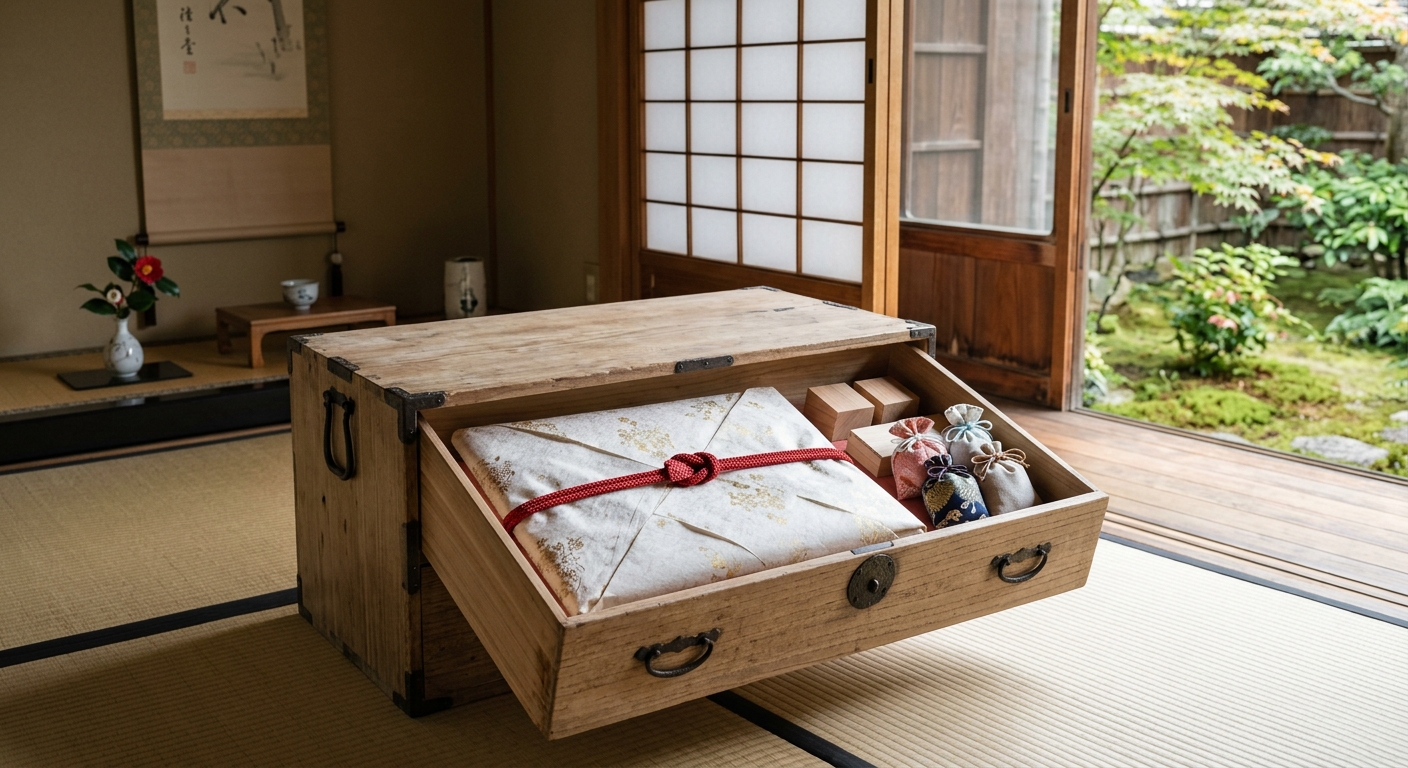
Store folded kimono wrapped in tatoshi (special Japanese washi paper) that allows the fabric to breathe while protecting it from dust. Place the wrapped kimono in a paulownia wood chest (kiri-tansu) if possible — paulownia naturally regulates humidity and repels insects. If a paulownia chest is not available, use acid-free tissue paper and store in a cool, dry place with cedar blocks for insect prevention.

HUMIDITY AND PEST CONTROL

The greatest enemies of stored kimono are humidity (which promotes mold) and insects (which eat silk). In Japan, the traditional practice of mushi-boshi (airing out) involves unwrapping and hanging stored kimono during dry periods (usually in autumn) to release trapped moisture. Use moisture-absorbing packets in storage areas but avoid direct contact with the fabric. Traditional insect repellents include camphor and cloves, but modern mothballs work as well — just ensure they don't touch the fabric directly.

SPECIAL CONSIDERATIONS

Gold and silver leaf embellishments should never be pressed or rubbed. Embroidered areas should be stored face-up to prevent thread damage. Obi belts require their own folding method and should be stored separately from kimono to prevent pattern transfer.

Try on this kimono with AI →
Generating image...

Where to Rent Kimono in Japan

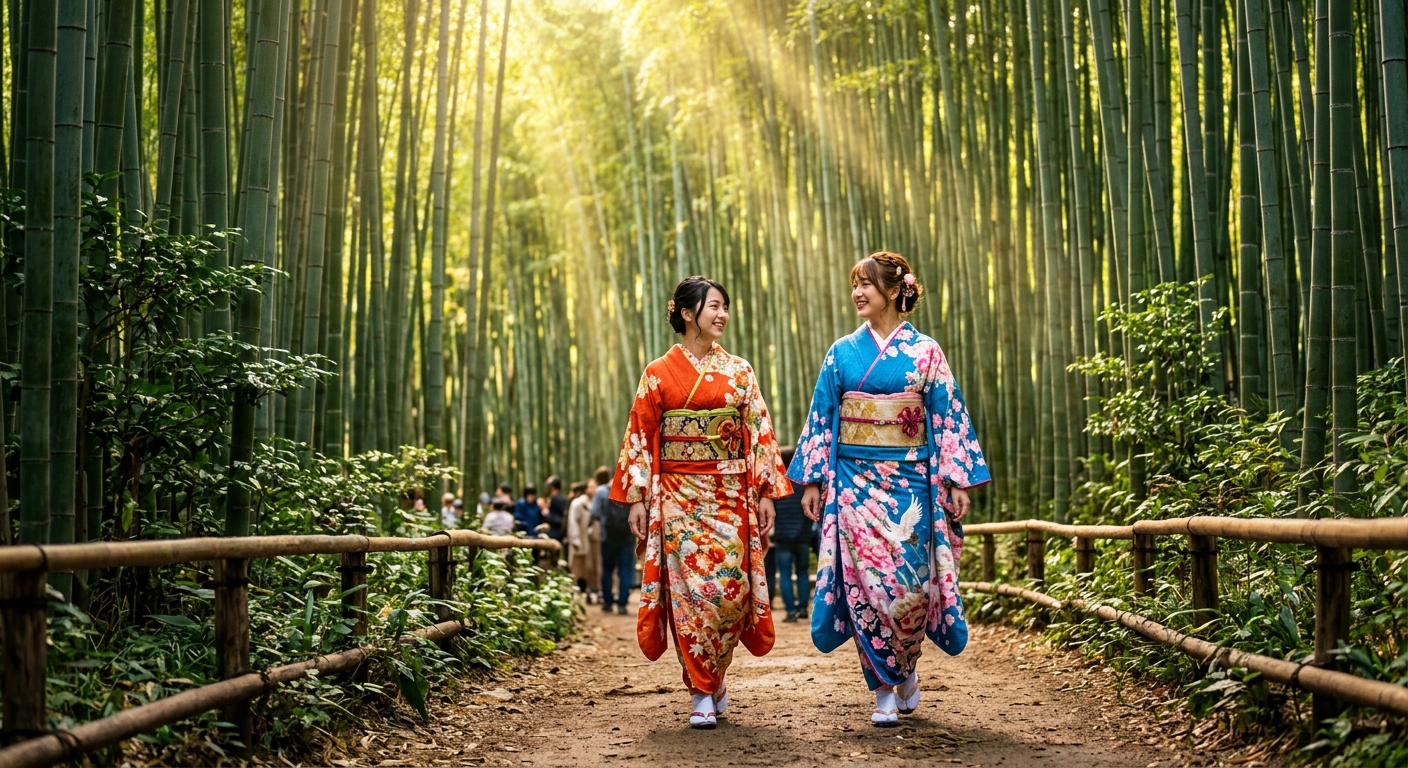
Renting a kimono is one of the most popular and accessible cultural experiences for visitors to Japan. Hundreds of rental shops across the country offer full packages including the kimono, accessories, and professional dressing service.

KYOTO — THE ULTIMATE KIMONO DESTINATION: Kyoto is without question the best city in Japan for kimono rental. The ancient capital's temple-lined streets, bamboo groves, and geisha districts provide the perfect backdrop for kimono photography. Key areas include: Higashiyama district near Kiyomizu-dera temple, where dozens of rental shops line the stone-paved lanes; the Gion geisha quarter, where wearing kimono feels particularly authentic; and Arashiyama's bamboo grove, one of the most photographed kimono spots in the world. Many Kyoto rental shops offer premium plans including elaborate hair styling, professional photography sessions, and the option to keep the kimono overnight.

TOKYO — MODERN MEETS TRADITIONAL: Tokyo offers excellent kimono rental centered around the Asakusa district, home to the iconic Senso-ji temple. The Nakamise shopping street leading to the temple provides a colorful traditional backdrop. Harajuku and Meiji Shrine are also popular kimono spots, offering an interesting contrast of traditional dress against Tokyo's fashion-forward culture. Some Tokyo shops specialize in vintage or designer kimono rentals that are harder to find elsewhere.

OSAKA — CASUAL AND FUN: Osaka's kimono rental scene is centered around Osaka Castle and the historic Shinsekai district. The city's more casual, fun-loving atmosphere means you'll find creative and playful kimono options alongside traditional designs. Osaka is also an excellent base for day trips to Nara, where wearing kimono among the ancient temples and friendly deer makes for unforgettable photos.

KAMAKURA — SEASIDE ELEGANCE: Just an hour from Tokyo, Kamakura offers a quieter alternative with its Great Buddha statue, bamboo temple gardens, and seaside atmosphere. Fewer tourists mean a more peaceful kimono-wearing experience, and the compact city center makes it easy to explore on foot.

KANAZAWA — THE HIDDEN GEM: Often called "Little Kyoto," Kanazawa's beautifully preserved samurai and geisha districts offer an authentic atmosphere with fewer crowds. The Higashi Chaya district's traditional tea houses provide a stunning kimono backdrop, and the city's Kenroku-en garden is one of Japan's top three landscape gardens.

WHAT TO EXPECT

Most kimono rental shops offer a similar experience. You choose your kimono from a selection (ranging from basic to premium), and a trained dresser helps you put it on — the full process takes about 20-30 minutes. Basic plans typically include the kimono, obi, undergarments, tabi socks, zori sandals, and a small bag. Many shops also offer hair styling, accessories, and bag upgrades for an additional fee. Rental periods are usually for one day, with return by early evening.

PRACTICAL TIPS

Book in advance during peak seasons (cherry blossom in spring, autumn leaves, New Year). Wear minimal clothing underneath — a simple T-shirt and shorts work well. Bring your own camera or book a photography package. Walking in zori sandals takes practice, so plan for shorter distances than usual. Most shops accept credit cards, and English-speaking staff are common at popular tourist locations.

Try on this kimono with AI →
Generating image...

Kimono Etiquette

Wearing a kimono comes with certain etiquette rules rooted in centuries of cultural tradition. While Japanese people are generally forgiving of honest mistakes by foreign visitors, knowing the basic rules shows respect and enhances your experience.

THE LEFT-OVER-RIGHT RULE

This is the single most important rule of kimono wearing. The left side of the kimono always wraps over the right side. Right-over-left is exclusively used when dressing a deceased person for burial. Getting this wrong is considered extremely inauspicious and will immediately draw concerned attention. An easy way to remember: you should be able to slip your right hand into the front of your kimono (like Napoleon's famous pose).

SEASONAL APPROPRIATENESS

Wearing kimono that match the season demonstrates cultural awareness. Wear cherry blossom patterns before or during cherry blossom season (not after). Summer calls for lightweight Yukata and cool colors; winter for heavier silk and warm tones. Wearing a motif slightly ahead of its season shows sophistication — plum blossom patterns in late winter anticipate spring's arrival.

MOVEMENT AND POSTURE

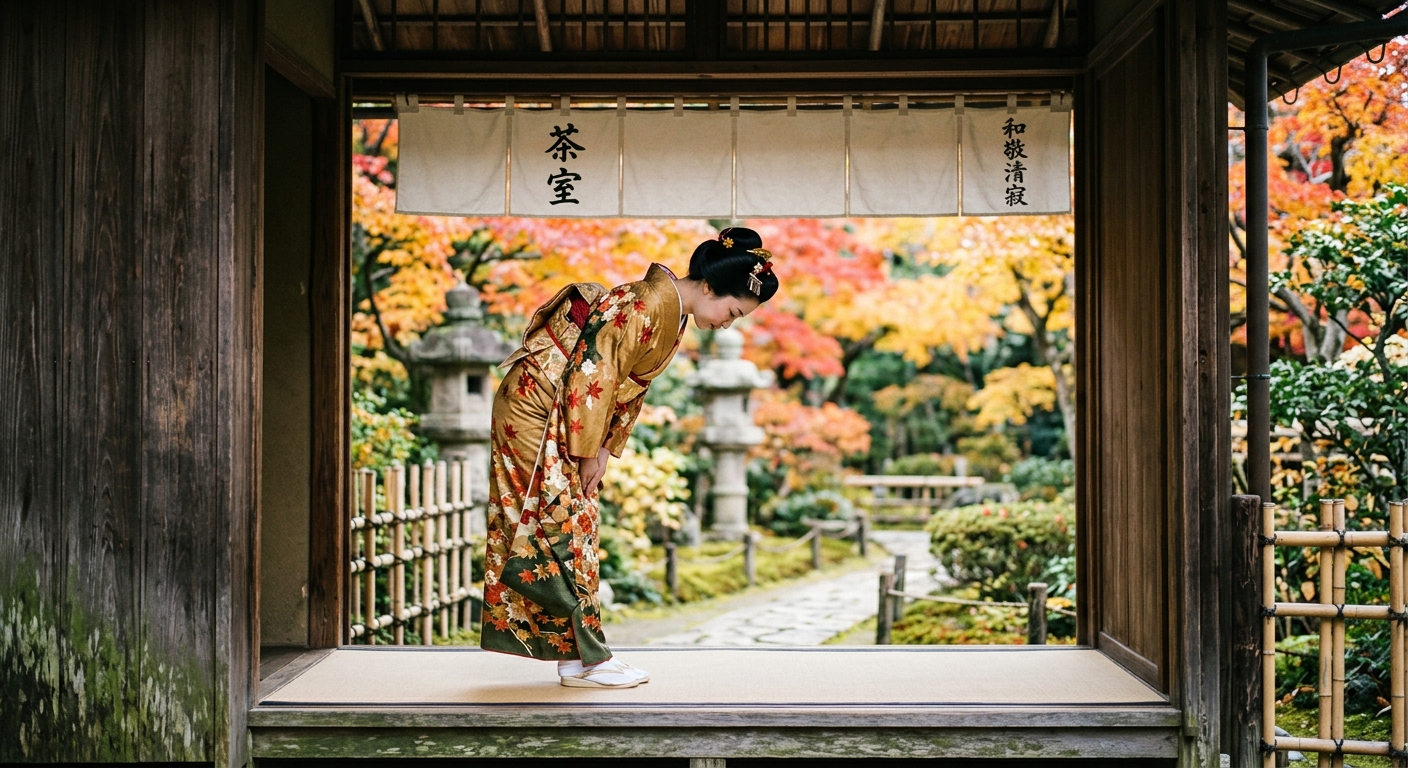
Kimono require more restrained, graceful movement than Western clothing. Walk with shorter steps (the narrow hem naturally limits stride). Keep your arms close to your body when reaching for objects — lifting the arm should reveal minimal underarm area. When sitting, smooth the back of the kimono before sitting down to prevent wrinkles. In traditional seating (seiza — kneeling), the kimono drapes beautifully, but practice sitting and standing gracefully beforehand.

COLLAR AND NAPE

The back collar of a kimono should be pulled away from the nape of the neck, exposing a graceful curve of skin. This eri-ashi (collar pull) is considered one of the most aesthetically important aspects of kimono wearing. Young women and geisha often show more nape; older women wear the collar closer to the neck. The inner collar (haneri) should be visible as a clean white line.

OBI PLACEMENT

The obi knot goes at the back for women (front-tied obi was historically associated with courtesans). For men, the obi sits lower on the hips. Never let the obi slip or become crooked — it is the structural and aesthetic anchor of the entire outfit.

ACCESSORIES AND COORDINATION

Accessories should complement, not compete with, the kimono. Formal occasions call for zori sandals and a small clutch bag. The obijime cord and obiage fabric should coordinate with the kimono's color scheme. Jewelry is minimal — traditionally, only a simple kanzashi (hair ornament) is worn. Modern etiquette permits small earrings and a watch.

PHOTOGRAPHY ETIQUETTE

When wearing kimono at temples and shrines, follow local photography rules. Avoid sitting on the ground or leaning against structures in a rented kimono. Be mindful of the trailing hem near puddles and rough surfaces. If you encounter maiko (apprentice geisha) in Kyoto, ask permission before photographing — many are working professionals, not tourists in costume.

DINING IN KIMONO

When eating, tuck a napkin or small towel (tenugui) into the collar to protect the fabric. Use the wide sleeve to shield your hand when pouring drinks. Be especially careful with soy sauce and other staining liquids. Many restaurants that cater to kimono-wearing guests provide protective towels.

CULTURAL SENSITIVITY

Wearing kimono as a visitor to Japan is generally welcomed and appreciated — it is seen as a sign of cultural interest and respect. However, avoid wearing kimono to inappropriate venues (nightclubs, fast-food restaurants) or treating it as a costume for comedy. Approach kimono wearing with the same respect you would give any other culture's traditional dress, and you will be warmly received.

Try on this kimono with AI →